 Newcomer's Guide
We welcome all new players - always!
You do not need to be a member of ACBL or CBA to play.
The Cincinnati Bridge Center, run by the Cincinnati Bridge Association, is home to several different club games and is the focal point for bridge in Cincinnati. There are several other club games in the Cincinnati Unit of the ACBL held at other venues.
Education:
If you need to learn how to play, or would like to improve your game,
the Bridge Center offers a variety of classes. Beginning
and Review the Basics lessons are suitable for both duplicate
and rubber bridge. Intermediate and advance lessons are designed
for duplicate play. See lesson schedule. Please contact one of our bridge teachers for
information or reservations. A teacher will be able to judge your
abilities and guide you to the best class. Private lessons are
also available. Nancy and Linda have years of teaching
experience and excellent reputations.
The CBA's library is another way to learn. The library contains over 400 bridge books. Members may check out books for 3 weeks for free.
Club Games:
For those interested in rubber bridge, the Bridge Center has a
"Home-Style" game are on Wednesday mornings. These games are
suitable for the "social" player. Standby partners are
available. Kay Mulford is the director.
In duplicate bridge, the same hands are played at many tables. You are scored based on how well your partnership played/defended the hand compared to the other tables. Therefore, winning is not dependent on getting "good hands." This form of bridge is fun, very popular, and highly recommended for those serious about improving their game.
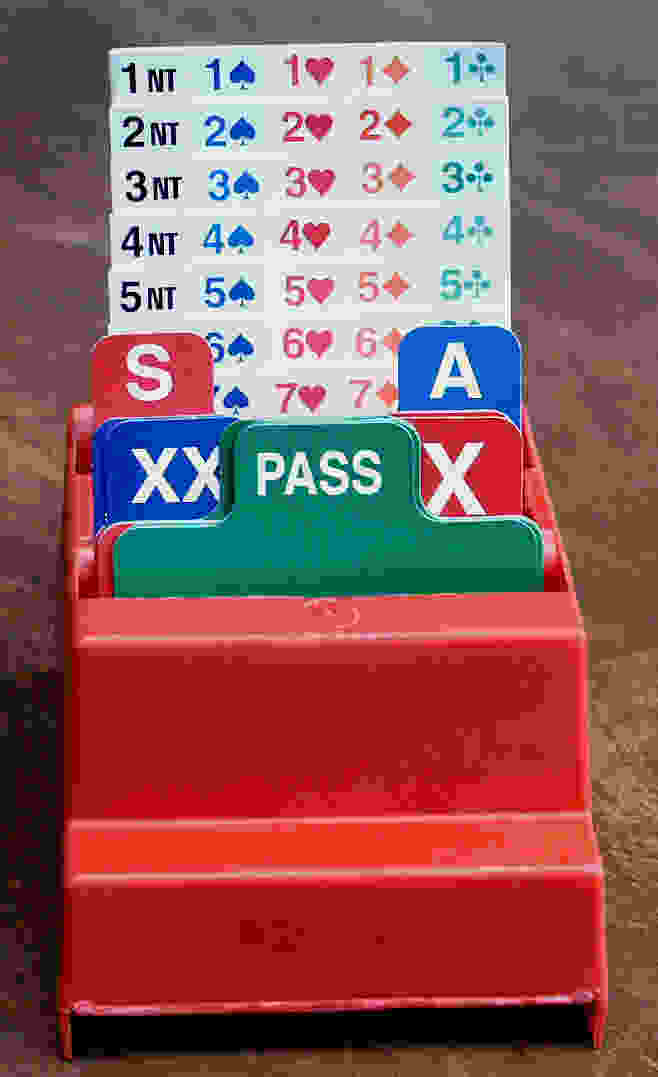
For those interested in duplicate, the Saturday 1PM newcomer game is a great place to start. Miek Purcell and Phyllis Bishop run the game and are very helpful and makes new players feel comfortable. There is a free seminar for Newcomers 30 minutes before game time. This is a good place to learn about duplicate procedures such as scoring, convention cards, movement, bidding boxes, and alerts. Don't worry! These procedures are easy to learn.
If the 0-40 master point Newcomer game is too easy, then you might want to try our 99er game on Tuesday evenings. We also have a limited (<2000 Master Points) game on Monday evenings for the more ambitious. It is a larger game and you might find it enjoyable.
Newcomers may play in the open games, but they are expected to have a basic understanding of standard bidding and duplicate procedures. It is important to be able to bid in tempo and to be able to complete the round of play on time. The 99er game has more experienced players and is a great way to expand your opponents. It is good for your game to play in open games. Open games are usually stratified, which means low point players may win points by beating other low point players. Don't be intimidated. Give the open games a try when you feel you're ready.
Please check the local game schedule for exact game times and director information (go to Play/Results on the home page). Club games are normally cancelled when there is a tournament in Cincinnati, so you may want to check the tournament schedule. Some games close on holidays. You may call the director before coming the first time. The director can answer all your questions.
If you need a partner you will always have one at the Saturday Afternoon Newcomer's Game. You can go to the Partnership link under My CBA on our home page for more help finding a partner. Keep in mind the director for the game will often be able to help you find a partner for their game.
Bridge Center:
The Bridge Center opens no later than ½ hour before game time.
Buy your entry no later than 5-10 minutes before game time so that the
game can start on time. Don't be late, it is discourteous.
Sometimes a late pair cannot be admitted into a game. The
duration of a typical game is 3½ hours.
Sometimes two different bridge games are taking place at the same time. Be careful not to buy an entry for the open game when you want Home-Style or Novice.
The fee for a club game entry is $7.00 per person. Charity or other special games may cost more, but they pay more masterpoints. About 40% of the players in a club game will win masterpoints (usually a fraction of a point).
Computer
Scoring:
Most duplicate club games are computer
scored. A computer printout, called the Press/Recap, is generated
at the end of the game. The press identifies the
players and the recap is the results on each hand
(board). A pair is given 1 matchpoint for each table they beat
and ½ matchpoint for each table they tie.
Some of the clubs use a computer driven machine to duplicate hands. At the end of the game, these clubs provide the players a paper listing of the hands, called a handrecord, . Club game results are posted on this website.
The CBA posts
the scores and hand records on our website. Go to Play/Results
and select the current year then month. Go to the day and event
link for the results and hand records.
ACBL:
Joining the ACBL (American Contract Bridge League) has many
benefits. You must be a member to have your masterpoints recorded
(registered into your permanent record). Winning masterpoints in
a club game is the first step toward becoming a life master. A
ranking and award system has been established by the ACBL based on
masterpoints. The ACBL mails its membership a monthly magazine
that contains the latest bridge news. There are many articles
written by experts for all levels of players including Novice.
Included with the magazine is your monthly masterpoint statement.
A portion of your membership fee is given to the local unit, the CBA. The CBA uses this money to mail its quarterly newsletter, Alert, to members in its jurisdiction. It is best to join the ACBL through your director or bridge teacher.
Awards:
The CBA has an award night in April for new life masters and players in
the Cincinnati Unit who won the most masterpoints in their
category for the previous year. Other awards are presented at
the CBA's Holiday party.
Join the fun and come out and play. We hope to see you soon at
one of our many club games.